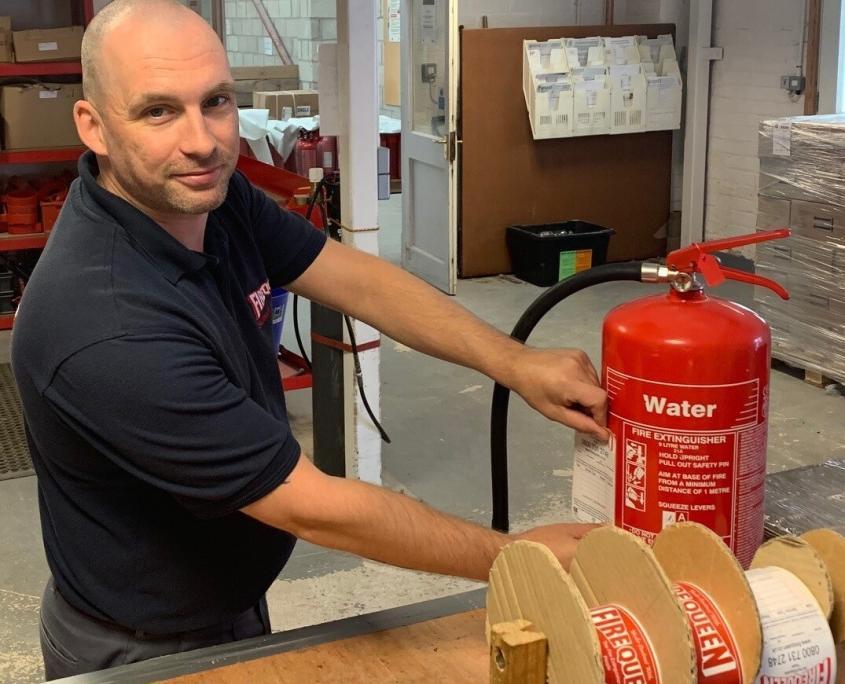
20 Definitive Tips For Leamington Spa Fire Extinguisher Servicing And Pat Testing20 Definitive Tips For Leamington Spa Fire Extinguisher Servicing And Pat Testing

Top 10 Tips When Evaluating Qualified Technicians For The PAT in Leamington Spa
The ability of the person conducting Portable Appliance Testing is the crucial element in transforming the mechanical process into a legally enforceable system. There there is no licensing or legal requirement for PAT testers under UK law. Regulation 16 stipulates that people are required to possess the "technical expertise or experience" necessary to prevent injuries and accidents. In order to meet the 'competence principle', the employers (dutyholder) must choose and hire only technicians who have a combination or formal training in practical skills, as well as good judgment. Without mandatory qualifications, there exists a wide range of technical skills. Therefore, it is crucial for employers to know how to rigorously examine the competence of technicians. A skilled technician is able to be more than merely able to perform tests. They know the fundamental principles of electrical security, are able to interpret the results accurately, and can make informed pass/fail decision based on IET Code of Practice.
1. The EAWR 1989 definition of competence in Leamington Spa
Regulation 16 in the Electricity at Work Regulations of 1989 defines that a person's ability to perform their job is essential to avoid injuries or risks. HSE defines competence as the capability to carry out the task in a safe and effective method without putting yourself or anyone else in danger. The HSE defines competence as "the ability to perform the task in a safe and efficient manner without risking their own safety or that of others." A technician must possess all three of these to be considered legally competent.

2. Professional qualifications and demonstrable skills in Leamington Spa
Although formal training is not legally required, it is the most effective method of demonstrating knowledge. City & Guilds Qualification 2377 ("In Service Inspection and Test of Electrical Equipment") has been recognised by the industry. Possession of the certificate does not imply competence. It must be combined together with practical experience. A person who is required to be a duty holder should look for an appropriate qualification as well as evidence of experience in the field. The technician must possess a wealth of experience to prove their competence.

3. The City & Guilds 2377 Qualification Explained
City and Guilds 237 is an IET Level 3 Qualification that measures the candidate's knowledge of the IET Code of Practice. The exam is divided into two sections, 2377-77, and 2377 – 78. The full award shows that the technician was independently assessed on his knowledge as well as practical abilities. It is advisable to confirm this certification by requesting the certificate number, and then confirming its validity by using the City & Guilds verification portal. Certificates can be forged.

4. Practical Hands On Experience is Essential in Leamington Spa
It is not worth anything without practical application. A skilled technician will have considerable practical experience in testing various appliances in different environments. This helps them spot subtle faults which a newbie may miss. They're also more equipped to deal with unusual equipment and perform efficiently in challenging environments such as construction sites or industrial facilities. A dutyholder should ask the prospective technician or service provider about the tester's years of experience and the types of sites they typically use to determine the importance of their background.

5. Knowledge of IET Code of Practice in In-Service Inspection and Testing
The IET Code of Practice (Code of Practice) is the standard for PAT testing in general. The IET Code of Practice is the bible for PAT testing. Technicians who have obtained a certification must have the copy and be able to comprehend the contents of it. Understanding the equipment classifications is essential and so is the visual inspection and test procedures as well as the proper use of testing instruments and the pass/fail results. The ability to accurately reference and implement this guidance is a crucial indicator of their competence and professionalism.

6. Equipment Calibration & Understanding Test Instruments
A skilled technician is aware that the test equipment they use is crucial in obtaining reliable results. A UKAS accredited lab has to regularly test their PAT tester (typically once a year) in order to maintain its precision. They should be able to present a valid calibration certificate for their device. Furthermore, they must understand how to use the device properly, conduct an everyday user test (e.g. an e.g., a lead test) and then interpret the results it provides rather than just relying on blindly recording numbers.

7. Ability to Conduct Meaningful Visible Inspections in Leamington Spa
The majority of all faults are discovered through an extensive visual examination. Highly skilled technicians place an enormous importance on this process by meticulously inspecting plugs, cables, connectors, and casings for wear, damage or indications of overheating. The technician understands how to connect a plug and has the proper fuse rating. It is possible that a tester who has less experience will rush or skip this process entirely.

8. Judging and Decision-Making: Interpreting Results as well as applying the Pass/Fail Criteria in Leamington Spa
The electronic tester produces readings; it is the technician who makes the judgment. This ability to interpret and use the IET Code of Practice limits for pass/fail as well as the specifications for the appliance is what proves competence. For instance, they must be able determine whether a slight increase in resistance to insulation is ok and when a seemingly passable reading on earth continuity could be a sign of latent problems within a particular appliance. The ability to make a decision is the main benefit of a professional who is qualified.

9. Problems with Liability and Insurance in Leamington Spa
While it is not a requirement of the law, any competent technician should have Public Liability Insurance. In the event a technician's actions result in damage to property, the customer is covered. The dutyholder will also strengthen their "due diligence" defense by selecting an experienced technician. They can then show that they have taken the necessary steps to choose a suitable person.

10. Communication Skills and Documentation Skills in Leamington Spa
Documentation is vital in the testing process. A skilled technician should produce precise, clear reports and asset registers that correctly identify each appliance, document all test results and clearly state the pass or fail outcome. They should also have the ability to communicate effectively with dutyholders. This involves educating them on the underlying issues, associated risks and the necessary actions to take. Communication is a crucial aspect of security. Check out the most popular Leamington Spa fixed electrical testing for website examples.

The Top 10 Tips For The Top 10 Tips For Extinguisher Maintenance Certification in Leamington Spa
In the UK maintenance of fire extinguishers is controlled by a comprehensive framework to ensure safety, compliance as well as quality. Contrary to some professions subject to state licensing requirements, the "Responsible" person (as defined by the Regulatory Reform (Fire Safety) Order of 2005) has the obligation to select a qualified professional. This makes understanding the nuances of certification and qualifications not just a technicality, but an essential aspect of legal due diligence. There are many different providers in the market with highly reputable businesses and individual operators It is essential to distinguish between qualifications. Selecting a company or technician that does not have the proper credentials could make insurance invalid, fail to meet legal obligations, and, most critically leaving the building and its the occupants without protection. This guide lists the top 10 credentials and certifications that you should look for when choosing an expert to assist with your fire safety.
1. The Gold Standard of Third-Party Certification: UKAS-Accredited (BAFESP101)
It is crucial to determine if a company has registered with the BAFESP101 scheme. BAFE (British Approvals for Fire Equipment) is an registered body that is independent. SP101 is a scheme that was specifically designed to maintain portable fire extinguishers. The UKAS (The United Kingdom Accreditation Service), that is the sole accredited body in the country, has certified this scheme. This scheme was assessed carefully against international standards. The highest proof of the competence of a business is an BAFE SP101 certification which has been recognized by UKAS. It verifies the regular inspection of the firm's operating procedures, quality management system equipment, technicians, and many other aspects.

2. The Alternative Benchmark is FIRAS certification.
FIRAS also known as the Fire Industry Association Recognition and Accreditation Scheme (FIA), is a different UKAS accredited certification scheme. It's operated by Fire Industry Association (FIA). It is a direct heir to BAFE SP101 when it comes to its credibility and rigor. FIRAS certification offers the same degree of assurance that a business has been independently assessed for compliance with all relevant standards, including the BS 5306-3. If you are a responsible individual an organization that has the BAFE SP101 or FIRAS certification is a valid and reliable choice. The UKAS-accreditation for the scheme in question is critical.

3. The Foundation: Compliance to BS The Foundation: Conformity with BS in Leamington Spa
It's important to note that any certification or qualification is based upon the British Standard BS 5306-3. This code of practice is a definitive set of guidelines for the maintenance of fire extinguishers. The code of practice should be followed by competent technicians. It defines the requirements for monthly inspections, basic annual services, extended 5-year services for extinguishers that are made of water, powder, or foam, and an overhaul every 10 years for CO2 units. Certifications like BAFE and FIRAS exist to audit and verify this conformance. Ask a business how they adhere to this standard when evaluating their work.

4. Individual Technician Competence: The FIA Units of Competence
The individual technicians are accountable for their work, regardless of the certification of the company. The FIA Units of Competence are the most widely recognized individual qualifications. They are nationally recognized training modules assessed against National Occupational Standards. These are the key modules:
FIA Unit 011 – Maintenance of portable fire extinguishers
FIA unit 010: Inspection of Portable Fire Extinguishers.
A skilled technician must to hold at minimum FIA Unit 001. Technicians who offer longer-term services (e.g. 5-year discharges), should also possess Unit 010. Request information from potential providers regarding their technicians' specific qualifications.

5. The Role of Trade Associations in Leamington Spa
Certification is not a result of membership in an industry association like the FIA. Membership in these trade organizations does not mean that you have been certified. Membership shows a commitment to the profession, and gives access to advice on the best practices. However it doesn't guarantee the competence of the company. Check for certifications that are specific to the technical scheme (e.g. BAFE SP101), rather than general logos for membership.

6. Insurance: Public Liability and Professional Indemnity in Leamington Spa
Any reliable service company will insist on having adequate insurance. They should have an extensive Public Liability Insurance (e.g. PS5mplus) to protect against any accident damages to your property that occur during their work. Professional Indemnity Insurance, which covers the costs of correcting any mistakes in their work, or giving advice is essential. A company that is certified will carry these insurances as a requirement of their certification, but it is always prudent to ask for proof of insurance prior to engaging their services.

7. Manufacturer-Specific Training
While the principles of BS 5306-3 can be applied to all situations however, each manufacturer has specific valve designs, models, and recharge procedures. A highly qualified technician will often undergo manufacturer-specific training. This is especially important in the case of less popular or more sophisticated extinguisher models, such as cleaner or wet chemical systems. Technicians can efficiently repair the equipment in your area without having the manufacturer's warranty voided.

8. The process of auditing How do you maintain certification in Leamington Spa
The understanding that certification does not occur in a single instance is vital. BAFE, FIRAS and other certified companies are subjected to an annual surveillance audit conducted by accredited auditors. The audits are conducted without notice and involve reviewing documentation, interviewing technicians and observing work on site. Continuous external scrutiny gives these certifications weight, ensuring that they aren't one-off assessments.

9. The "Competent Person" vs. the "Skilled Person"
A legal distinction exists. In accordance with the Fire Safety Order (FSO), only "competent individuals" are allowed to maintain equipment. The law states that the person has adequate training, experience, and experience to correctly implement the measures required. The term "skilled person" (or skilled tradesperson) has the physical skills to complete a task. A qualified fire-extinguisher technician should have the physical skills to perform the job, as well being able to understand the regulations, standards, and dangers associated with the task.

10. Due Diligence: Verifying the Certificates and Claims
The responsibility for confirming qualifications is the responsibility of the responsible person. The logo on a website or van does not suffice.
Verify Online Check Online: Verify Online: Both BAFE as well as the FIA have online directories where you can search for a company by name to confirm their status as a certified company. in Leamington Spa
Request Certificates. A reliable company will be willing to send copies of the BAFESP101 or FIRAS certificates, insurance documents, proof of their technicians' FIA certifications, etc. in Leamington Spa
Verify Expiry Dates: Make sure all certifications and insurance policies are up-to-date and current. in Leamington Spa
This verification process your main defense against hiring an unqualified provider. It is also part of your due-diligence. View the best fire extinguisher service in Leamington Spa for site advice.

Why Chenille Feels Different Than Embroidery?Why Chenille Feels Different Than Embroidery?

Have you ever brushed your fingers across a patch on a jacket or cap and felt a plush, almost carpet-like texture that immediately stood out from traditional flat stitching? That unique sensation is the magic of Chenille patches. Unlike regular embroidery, which is smooth, dense, and flat, chenille has a raised, fuzzy surface that feels soft and luxurious to the touch.

This striking difference isn’t just about looks—it’s about how each technique is crafted. Embroidery relies on tightly woven threads to create intricate designs, while chenille uses a looped, velvety yarn technique that creates a three-dimensional, tactile finish. That’s why when you compare the two, your fingers instantly notice the difference. But why does chenille feel so different, and why does it stand out so much in fashion, branding, and personal expression?

Whether you’re a student rocking a varsity jacket, a fashion brand designing standout merchandise, or a small business owner looking for custom logo patches, understanding the difference between chenille and embroidery can help you choose the perfect option. Chenille patches aren’t just eye-catching—they carry nostalgia, premium quality, and a personality that embroidery alone can’t replicate.

In this comprehensive guide, we’ll break down what makes chenille patches feel unique, compare them with embroidery in terms of texture, durability, and style, and explore how you can use both in your clothing or branding. By the end, you’ll know exactly why chenille patches have that distinct feel—and when they’re the right choice for your project.


What Is Chenille?

Chenille is a decorative textile technique that originated in the 18th century in Europe. The word chenille itself comes from the French word for “caterpillar,” which perfectly describes its fuzzy, plush texture. In patch making, chenille involves looping yarn through a base fabric in a way that creates raised, velvety fibers.

The Look and Feel of Chenille

  • Soft and Fuzzy: When you run your hand across chenille, it feels like a miniature carpet or soft rug.

  • Bold and Raised: Designs appear thick, three-dimensional, and bold, making them stand out on jackets, sweaters, and bags.

  • Classic and Nostalgic: Chenille is closely tied to Chenille patches used on varsity jackets, instantly giving a vintage and collegiate vibe.


What Is Embroidery?

Embroidery is the art of decorating fabric with needle and thread, a technique that dates back thousands of years. In patch form, embroidery stitches are tightly packed to create intricate patterns, logos, or lettering.

The Look and Feel of Embroidery

  • Smooth and Flat: Embroidery feels firm and slightly textured, but not fuzzy.

  • Detailed and Precise: Embroidery allows for fine lines, small fonts, and detailed logos.

  • Versatile and Professional: Embroidered patches are widely used for uniforms, branding, and decorative fashion.


Key Differences Between Chenille and Embroidery

1. Texture

The most obvious difference lies in how each feels. Embroidery is smooth with noticeable stitch lines, while chenille is soft, fluffy, and cushion-like. This tactile difference is why Chenille patches grab attention instantly.

2. Appearance

  • Embroidery: Shiny, polished, and precise.

  • Chenille: Plush, bold, and dimensional.

3. Durability

Embroidery tends to be more durable since the threads are tightly packed. Chenille, while sturdy, can flatten over time if not cared for properly.

4. Applications

  • Embroidery: Best for detailed logos, uniforms, and corporate branding.

  • Chenille: Best for varsity jackets, sports teams, fashion items, and bold statement designs.


Why Chenille Feels Different

Chenille’s unique feel comes from how it’s made. Instead of tightly weaving thread, chenille uses looped yarn that is cut and brushed to create a soft pile. This method leaves small tufts of yarn sticking out, giving it that fuzzy, carpet-like feel.

The yarn itself also plays a role—typically thicker and softer than embroidery thread, chenille fibers are meant to be felt as much as seen. That’s why Chenille patches almost always feel warmer, softer, and more dimensional than embroidery patches.


The History of Chenille vs. Embroidery

Embroidery’s Ancient Roots

Embroidery has been around for centuries, with evidence found in ancient Egypt, China, and Europe. It was often a sign of wealth and skill.

Chenille’s Modern Rise

Chenille, however, became popular in the 19th and 20th centuries, particularly in America, where Chenille patches became the badge of honor for varsity athletes. This cultural connection gives chenille a nostalgic, iconic feeling embroidery can’t fully replicate.


Practical Uses of Chenille and Embroidery

Chenille in Everyday Life

  • Varsity jackets and letterman jackets

  • Sports team logos

  • Retro and vintage fashion pieces

  • High-end streetwear

Embroidery in Everyday Life

  • Company uniforms

  • Corporate logos on shirts, hats, and bags

  • Promotional merchandise

  • Custom name patches


Pros and Cons of Chenille

Pros

  • Eye-catching and tactile

  • Perfect for bold, large designs

  • Nostalgic and stylish

Cons

  • Less detail compared to embroidery

  • Requires careful washing and handling

  • May not suit very small lettering


Pros and Cons of Embroidery

Pros

  • Long-lasting and durable

  • Great for intricate details

  • Professional, clean appearance

Cons

  • Not as bold or soft as chenille

  • Limited three-dimensional feel


How to Choose Between Chenille and Embroidery

Ask yourself:

  • Do you need bold, eye-catching patches? → Choose Chenille patches.

  • Do you need fine detail and durability? → Choose embroidery.

  • Do you want a mix of both? → Many manufacturers combine chenille with embroidery for the best of both worlds.


The Future of Chenille and Embroidery in Fashion

Today, both techniques are widely used. However, the revival of vintage and retro fashion has brought Chenille patches back into the spotlight. From luxury streetwear brands to independent creators, chenille is becoming a statement piece again.

Embroidery remains timeless and professional, perfect for corporate, military, and everyday apparel. The combination of the two creates endless creative possibilities.


Caring for Chenille vs. Embroidery

  • Chenille: Hand wash or use gentle cycles. Avoid excessive heat or pressure. Store carefully to maintain texture.

  • Embroidery: Machine washable and low-maintenance. Less likely to lose its texture over time.


Conclusion

Chenille feels different than embroidery because it is different. Where embroidery relies on tightly woven stitches to create smooth, flat designs, chenille embraces fuzzy yarn loops that form a raised, plush texture. The result is a patch that doesn’t just display a design—it invites you to touch it, feel it, and remember it.

That’s why Chenille patches carry such a strong cultural and emotional weight, from varsity jackets symbolizing achievement to modern fashion statements. They feel bold, nostalgic, and distinctive, offering a sensory experience embroidery simply can’t replicate.

In the end, whether you choose embroidery or chenille depends on your goals. If you need precision, durability, and detail, embroidery delivers. If you want softness, boldness, and an unforgettable tactile feel, chenille is the way to go. Both have their place, but only chenille can make you stop and say, “Wow, that feels different.”

The Techniques Behind Joy Marie Palm-miller’s PaintingsThe Techniques Behind Joy Marie Palm-miller’s Paintings

Imagine standing before a canvas that seems alive, where every stroke whispers a secret and every hue sings a melody. That is the world of Joy Marie Palm-Miller, a visionary painter whose work transcends the boundary between reality and imagination. Her paintings are not mere visuals; they are symphonies in color and texture, crafted with techniques that mesmerize the eye and stir the soul.

What makes her creations so captivating? It’s not just the subject matter. It’s the way she wields her brush, layers pigments, and manipulates light and shadow. Every element, from her choice of medium to her deliberate imperfections, tells a story of innovation and mastery. For both aspiring artists and seasoned enthusiasts, exploring the methods behind her art is like unlocking a treasure chest of inspiration.

Whether you want to improve your own craft, better appreciate fine art, or simply immerse yourself in the beauty of creative genius, understanding the techniques behind Joy Marie Palm-Miller's paintings offers invaluable lessons. Her artistry showcases how intention and execution combine to elevate painting from skill to transcendence.

Let’s embark on a deep exploration of her methods, her philosophy, and the secrets that make her canvases resonate with emotion and vitality.

The Early Foundations of Joy Marie Palm-Miller’s Technique

Joy Marie Palm-Miller did not stumble into her craft by accident. Her journey reflects years of disciplined practice, academic training, and intuitive exploration. From the very beginning, she showed an affinity for experimenting with painting techniques that went beyond convention.

Classical Roots

Her earliest works demonstrate a grounding in classical traditions. She studied the chiaroscuro method—contrasting light and dark to produce dimensionality. This is evident in her portraits, where the play of illumination breathes life into human features. By adhering to these classical foundations, Palm-Miller built a technical bedrock upon which her later innovations would flourish.

Experimentation with Mediums

Unlike artists who confine themselves to a single medium, Palm-Miller explored oils, acrylics, watercolors, and mixed media. Each medium influenced her technique. Oils gave her depth and richness, acrylics allowed speed and layering, and watercolors introduced fluidity. Her boldness in blending these approaches set her apart early on.

Signature Techniques in Palm-Miller’s Paintings

Layering and Glazing

One of the most distinctive aspects of Palm-Miller’s work is her mastery of layering. She applies paint in translucent layers, allowing colors to interact optically rather than mechanically. This method, known as glazing, creates luminosity. Viewers often remark on the way her canvases seem to glow from within.

Texture as Expression

Texture plays a central role in her storytelling. Palm-Miller often incorporates thick impasto strokes, giving her paintings a tactile quality. These surfaces invite viewers not just to look, but to feel the energy embedded within. By alternating between smooth and coarse textures, she emphasizes movement and rhythm in her compositions.

Controlled Chaos

Palm-Miller embraces spontaneity without relinquishing control. In her abstract pieces, she splatters, drips, and smears paint in seemingly chaotic ways. Yet upon closer inspection, the chaos is balanced with meticulous detail. This juxtaposition between freedom and structure reflects her artistic philosophy: that beauty often arises from tension.

Symbolic Color Use

Her color palettes are rarely random. Palm-Miller assigns symbolic meaning to hues. Blues evoke introspection, reds pulse with passion, and golds symbolize transcendence. She layers colors to produce emotional resonance. Viewers often find themselves feeling her paintings before fully understanding them.

Philosophical Underpinnings of Palm-Miller’s Art

Art as Narrative

For Palm-Miller, each canvas tells a story. She does not see painting as decorative, but as a form of narrative. The figures, shapes, and patterns in her works are visual metaphors that encourage interpretation. This narrative-driven approach ensures her paintings linger in the mind long after viewing.

The Role of Intuition

Technique is important, but Palm-Miller emphasizes intuition. She frequently speaks about listening to the canvas—responding to what emerges rather than forcing a predetermined outcome. This balance between deliberate craft and instinctive response is a hallmark of her style.

Bridging Tradition and Modernity

While her methods are rooted in tradition, Palm-Miller embraces modern sensibilities. She draws from digital design for inspiration, integrates unconventional tools, and sometimes mixes industrial materials into her paintings. This fusion creates a bridge between the past and present.

Step-by-Step Breakdown of Her Creative Process

To better appreciate her artistry, let’s look at the general stages of Palm-Miller’s process.

1. Conceptualization

She begins with a theme or emotion rather than a fixed subject. Sketchbooks filled with notes, doodles, and color swatches serve as incubators for her ideas.

2. Surface Preparation

Palm-Miller carefully primes her canvas, often adding underpaintings. These underlayers create subtle tonal variations that later shine through the top layers.

3. Base Composition

Using broad strokes, she establishes the foundational composition. This stage emphasizes balance and proportion.

4. Layering and Glazing

Thin, translucent layers of paint are applied, one over another, to build depth. Each layer must dry before the next begins.

5. Textural Embellishments

At this point, she introduces texture—impasto, scraping, or additive materials like sand or paper.

6. Refinement

Details emerge as she sharpens focal points. This includes refining contours, adjusting tones, and adding symbolic highlights.

7. Final Varnish

Palm-Miller seals her work with varnish, enhancing saturation and protecting the canvas.

Influence of Environment and Personal Life

Palm-Miller’s environment plays a pivotal role in shaping her art. Nature often appears as a recurring motif. Rolling landscapes, floral patterns, and celestial skies dominate her canvases. Her travels also introduce diverse cultural symbols, enriching her vocabulary of imagery.

Her personal experiences—joy, struggle, resilience—permeate her paintings. She believes authenticity emerges when an artist infuses personal narrative into technique. This explains why her art feels deeply relatable, even when abstract.

Techniques Viewers Can Learn and Apply

One reason Palm-Miller resonates with a wide audience is her willingness to share her methods. Here are some techniques aspiring artists can adopt:

  • Glazing practice: Experiment with thin layers of color to achieve depth.

  • Texture exploration: Use palette knives, brushes, and unconventional tools.

  • Color symbolism: Assign meaning to your palette to enhance storytelling.

  • Embrace intuition: Allow spontaneity to guide part of your process.

The Lasting Impact of Palm-Miller’s Techniques

Palm-Miller’s contribution goes beyond individual paintings. Her methods influence contemporary art pedagogy, inspiring students to value both discipline and freedom. Galleries and critics consistently highlight her as an innovator whose techniques embody modern expression while respecting tradition.

She has also reshaped how audiences interact with art. Viewers are no longer passive spectators; they become participants in interpreting layered narratives.

Conclusion

The techniques behind Joy Marie Palm-Miller’s paintings are a testament to the harmony of skill, imagination, and philosophy. From classical foundations to bold innovations, she demonstrates how art can be luminous, textured, symbolic, and deeply human. Her layering creates depth, her textures embody emotion, her colors convey meaning, and her balance between chaos and control reflects life itself.

For aspiring artists, her work offers practical lessons: explore beyond one medium, embrace both intuition and discipline, and use every stroke to tell a story. For admirers, her canvases invite immersion, encouraging viewers to not just observe but to feel, question, and reflect.

Ultimately, Palm-Miller’s art is more than technique—it is an experience. An encounter with her paintings is an invitation to journey inward, to see not just the canvas, but ourselves reflected in it. That is the enduring power of her craft.

20 PRO SUGGESTIONS FOR PICKING TOTO GALLERY WEBSITES20 PRO SUGGESTIONS FOR PICKING TOTO GALLERY WEBSITES

The Top 10 Benefits To The Slot Community In Terms Of Inclusion And Engagement
Creating an inclusive and engaging slot game community offers several advantages, especially for creating a positive, vibrant, and supportive environment. The top 10 benefits of inclusivity and community engagement for a community slot game:
1. Enhance Player Retention and loyalty
Engaging everyone in the group: This gives them an impression of belonging to the community by making them feel appreciated and welcome, regardless their skill or background. People who feel a sense of belonging to a community are more likely to remain active for a long time.
An increase in loyalty to the site – Players who are engaged are able to continue playing slot machines in the community, by taking part in events, discussions, and other activities, which boosts loyalty.

2. Fostering Skill and Learning Development
Collaborative Knowledge Sharing: An active and welcoming community encourages experienced players to share their techniques, tips, and knowledge with others. This helps new members learn more quickly, and increases the level of skill of everyone in members of the group.
Supportive Environment : This ensures new or less experienced participants feel comfortable in asking questions and gaining knowledge about other people.

3. Camaraderie between friends and social networks
Building friendships: Community involvement provides players with opportunities to bond over shared interests, and to build friendships as well as long-term connections.
Competitors and camaraderie In competitive settings inclusion creates a welcoming environment where the players support each other, enjoy the game, and don't feel isolated or solitary.

4. Ideas and perspectives from a variety of perspectives
Variety of Strategies: An inclusive community brings people together with different backgrounds and perspectives which results in different tactics and games.
New perspectives: Those with diverse backgrounds can bring a fresh viewpoint to the table. This could bring new ideas and perspectives that wouldn't have been possible in a group that is more homogeneous players.

5. Empowering Player Voices
Everyone Feels Like They Are Heard. If the community values inclusion, members have the chance to share their thoughts, share their opinions, and take part in conversations. This results in a more wholesome community where no one feels excluded.
Changes centered around gamers: Game developers and community managers that are open to hearing different opinions can take better informed decisions that will benefit a broader group of players.

6. Increased Participation at Tournaments and events
Increased event engagement A welcoming and inclusive environment encourages more members of the community to attend events like live streams, discussions and slot tournaments. People are more likely to take part in community events when they're accepted and valued.
The events will be appealing to people of all ages.

7. Positive Reputation for Community Growth
Attracting New Members A community that is active and has a a strong focus on participation and inclusion can build a reputation, which makes it appealing to potential members. People will sign up more frequently in the event that they feel like the community is welcoming and is enjoyable.
Word of mouth is the best way to grow: Community members who are happy and active will invite their friends to join or promote their communities. This organic growth leads to a large member base.

8. Engage in more meaningful interactions
Rich conversations. Inclusion in communities promotes deep conversations in which players feel at ease discussing their ideas, thoughts, and concerns. This helps to build deeper bonds within the community. This also provides an experience that is enriching.
Personal Connections. Engaging people at a level that goes beyond game mechanics will enhance the social aspect and will make the platform more than simply an online gaming platform.

9. Greater Ownership and Pride
Community Pride: Members who are active are proud of their community and the achievements they've made whether it was an event that was successful or the positive vibe they contributed to creating. This pride in ownership can lead to greater involvement and participation.
Member-Driven initiatives: Players who are more inclined to plan their own events or develop content for everyone are those who are the most likely to feel part of a community that is supportive them.

10. Better Conflict Resolution and Harmonious Environment
Inclusion in Problem-Solving. Conflicts are more likely be resolved peacefully when the people in a group feel an understanding of each other's feelings, and they have an appreciation. This is a fantastic method to maintain harmony conflict or when there is a sense of competition.
Shared Responsibility: When everyone is included in community decisions and discussions the members share responsibility to ensure a positive and harmonious environment which reduces toxicity and increases general enjoyment. See the recommended 토토갤 for website tips including 카지노 코인, 카지노 커뮤니티 순위, 카지노 머신, 카지노 커뮤니티 순위, 카지노 추천, 개집 슬롯, 카지노 포인트 그리고 카지노 도박 사이트.

The Top 10 Gaming Platforms And Usability Benefits Of A Community For Slot Games
The appropriate platform needs to be selected and its accessibility will be ensured for a flourishing community of slot games. The platform must be easy to use and intuitive so that players can remain. Here are the Top 10 advantages of choosing a platform and accessibility in a game community:
1. The Player Experience
A well-designed platform with user-friendly interfaces and intuitive navigation make sure that players get a great experience. The accessibility to games, community features, leaderboards, and other tools keeps players entertained, lessens frustration and leads to a longer and more enjoyable time of play.

2. Seamless Device Compatibility
A platform optimized for both mobile and desktop devices allows users to effortlessly switch between devices. The same gaming experience can be enjoyed by players both at home and traveling, increasing their comfort while staying connected to community.

3. Get quicker loading times
Optimised loading speeds, low latency performance and other usability improvements make gaming fluid. Fast loading times reduce downtime and keep gamers entertained not irritated by slow or glitchy gaming.

4. Accessible to all Skill Levels
Players of all levels can be accommodated with an interface that is simple to navigate. The simple help sections and clear directions on the game will help beginners feel comfortable and encourage them to join the community and become active participants.

5. Reduced Learning Ccurve
A platform that is specifically designed to be user-friendly has a lower learning curve. The platform is able to be accessed quickly, and users can participate in tournaments or connect with fellow members of the community. This can lead to more participation and retention.

6. Customizable User interfaces
Users can tailor their experiences with a platform which offers options that can be customized. These include personalized dashboards and avatars of players and game filtering. This degree of personalization makes players feel in control, and improves overall satisfaction.

7. Secure and reliable Transactions
Platform usability is extended to include safe and simple payment options. Players are more likely engage in transactions if the platform offers a seamless and secure payment method for withdrawals and purchases in-game.

8. Easy access to support
If you've got access to a built-in and readily accessible support options such as live chat, FAQs, or forums, users are able to solve issues quicker. Support that is simple to use reduces frustration, and makes players feel valued. This helps increase retention.

9. Optimized to Social and Community Features
The best-designed platforms integrate social functions seamlessly including friend lists, live chats, and leaderboards for players. This allows for players to be able to easily interact with one another. This builds a stronger community and encourages interactions within games.

10. Scalability, Future-Proofing and Future-Proofing
A platform that has been carefully selected is flexible and can accommodate future expansions, such as new game releases, additional features, or an increase in the size of the community. The flexibility of the platform ensures that the community's growth without any technical restrictions or interruptions and keeps the gaming experience fresh and exciting.

By selecting a platform of easy-to-use gaming communities, they can provide a seamless, comfortable, and secure experience. These factors improve engagement, encourage social interaction, and increase long-term loyalty.

20 TOP WAYS FOR FIRE EXTINGUISHER SERVICING AND PAT TESTING IN BURNTWOOD20 TOP WAYS FOR FIRE EXTINGUISHER SERVICING AND PAT TESTING IN BURNTWOOD

Top 10 Ways To Assess The Extent Of PAT Services in Burntwood
The United Kingdom's Portable Appliance Testing service goes well beyond applying a simple tester to an electrical plug. A comprehensive PAT service represents the complete management of electrical equipment system that is designed to meet the dutyholder's obligations in the Electricity at Work Regulations 1989 and the Health and Safety at Work Act 1974. The range of services offered includes the initial risk assessment and the development of a policy through physical testing to thorough documentation, and continual assistance. Knowing the entire scope is crucial for selecting a provider that can deliver a legally valid security-based, risk-based maintenance system rather than merely the transactional testing services. A limited scope could lead to problems with compliance while a program that is too broad could cause waste of resources. The most effective PAT programmes are adapted to the particular surroundings, equipment portfolio and the risk profile of the organisation to ensure security and compliance with regulations can be achieved effectively and efficiently.
1. Initial Risk Assessment and Policy Development
The basis of any reputable PAT service is a formal risk assessment. The service is offered as a standard service, not as an added-on service by a reputable service provider. The process involves having a consultant visit the premises to evaluate the kinds of electrical equipment in use as well as the settings they operate in (e.g., office, workshop, construction site), and the competence of the people using it. The outcome is a report that documents the risk assessment and justifies an individualised testing and inspection procedure. It outlines the frequency for different types of equipment. This could also mean aiding a client in the development of a formal PAT Testing Policy. It will assign responsibility and outline the procedures.

2. Asset Register Creation and Management
The most fundamental function is the maintenance and creation of a comprehensive asset register. It's more than just a listing as it's an actual database, which is the basis of the document. Registers must contain a unique number ID, a description, the locating, type, manufacturer, serial number and class (I or 2) for every appliance. The scope of service should include marking each appliance with a unique identification number and providing access to a version digital of the register that is updated after each testing cycle.

3. Formal visual inspection in Burntwood
This aspect is vital because it is able to detect as much as 90 percent of the faults. An extensive inspection is carried out by a highly skilled technician. The inspection includes checking the plug (including correct wiring and fuse rating), the cable (for scratches, abrasions, or degradation) as well as the casing for the appliance (for damages or signs of overheating) and the compatibility of the device for its environment. This can be more thorough and valuable than the test conducted electronically.

4. Combine Inspection and Testing
This is the primary technical support. A PAT test that is calibrated is a series of electronic safety tests. The specific tests are subject to the class of equipment, but they usually consist of continuity to earth (for Class 1) as well as insulation resistance and leads polarity tests. Full-scope services make sure that the technician knows the tests that should be performed and how to utilize the test leads, and how to interpret the results in connection with the IET Code.

5. Repair and Remediation Services
A provider with a broad scope will provide remediation service after identifying an problem. It could be as easy as replacing a fuse or plug right on the spot, or it could be more complex repairs. Some companies have an in-house workshop for malfunctioning items or have an exchange system that includes refurbished appliances. They will also take care of the entire process: keeping the damaged equipment in a safe place, performing the repair by retesting it, then updating the asset register and certification. It's a simple approach which the customer can profit from.

6. Certification and Reporting – Complete in Burntwood
It's impossible to provide a complete service without thorough documentation. It includes a Certificate of Compliance, a detailed Report listing all appliances tested, their unique IDs tests, results of the test, pass/fail results, and the date when the next inspection will be. Online portals are offered by the best companies, allowing customers to access their asset register, certification, and audit reports at any time.

7. Advisory and Consultancy Services
Beyond testing, a premium service includes expert advice. It could include things like advising on the suitability of equipment for a particular task or environment; guidance on managing electrical safety for employees who work at home; helping customers understand their legal duties; as well as assisting in responding to HSE or insurance enquiries. This consultancy changes the provider's function from one of a tester to one of a strategic advisor in electrical security.

8. User Awareness Training in Burntwood
Some training companies provide training to their staff clients to create a safe environment. The training teaches employees how to perform basic pre-use visual tests (a legal requirement under PUWER 1998) and how to recognize potential hazards, and how to report equipment that is defective. In this manner, empowering users significantly enhances safety and reduces the frequency of equipment damage in between formal inspection intervals.

9. Hire Equipment and Contractor Tools Management in Burntwood
In a comprehensive service, there are procedures to manage electrical devices that are brought in by contractors or external companies. The service provider can set up a procedure whereby all of the equipment has to be brought in for inspection and testing before being used at the site. They can issue a separate log as well as certification for these transient assets and ensure that the client's Burntwood is secure and compliant in spite of the increased use of external equipment.

10. Monitoring and Review of the Program on a regular basis. in Burntwood
A PAT program is not an event in itself it is a series of events which repeats itself. Full-service providers will provide ongoing monitoring that includes reminders, as well as conducting a risk assessment every year. The results of previous testing can be used to alter frequency, and extend the intervals for equipment that is reliable or reducing them for difficult items. Have a look at the most popular Burntwood portable appliance testing for site advice.

Top 10 Tips For Customer Service In Fire Extinguisher Servicing in Burntwood
Support for customers is an essential aspect of the highly-regulated sector of fire safety. It is more than typical service interactions and is the most important element to ensure compliance with legal requirements and risk management. In accordance with the Regulatory Reform Order (Fire Safety) 2005, the customer support provided by a service provider directly affects their ability to ensure compliance at all times, manage documents efficiently, and effectively respond to safety-related questions. Superior customer support acts as the central nervous system for the contract for service, coordinating the scheduling process, directing emergencies and interpreting compliance requirements and ensuring an excellent audit trail. It can mean the difference between a provider that does annual fire safety checks to having a partner who is willing to take on the burden of fire safety. Evaluating support structures–including communication channels, account management, technical expertise, and problem-resolution protocols–is therefore essential for selecting a provider who can deliver not just technical competence but comprehensive peace of mind.
1. Access to Call Centres with Dedicated Account Management or General Call Centre Access
Customer support should be organized. A dedicated account model provides you a single contact person who is aware of your specific needs, the background of your property, and the process of building it. The person who handles your account has a comprehensive understanding of your contract, is able to answer any questions, arrange visits and resolve problems without needing to explain the circumstances. Another option is to utilize an all-encompassing call center which connects you to a different representative each time. This could lead to problems with communication, frequent information exchanges, and a lack of accountability. If your company has multiple Burntwoods or requires intricate compliance management, it is essential to have a dedicated Account Manager.

2. Multi-Channel Support and Guaranteed Response Times in Burntwood
Modern customer support should be available through a variety of channels to suit different preferences and needs. In this, there should be a dedicated phone line and email address for support as well as a portal online that provides 24/7 access to information and documents. It is crucially important for each channel to have an Service Level Agreement for response times. For example, a company may promise to respond to emails within two hours, or a callback from the help desk in 30 minutes during business hours. These measurable promises prevent requests from going unanswered and guarantee timely compliance assistance.

3. Technical Support and Compliance Advisory Services in Burntwood
Beyond the administrative assistance, top-quality customer service provides advice on compliance and technical issues. This means your person to contact can help answer complex questions about British Standards (BS 5306-3) and advise you on the right type of extinguisher for the new threat or assist in interpreting recommendations from an Fire Risk Assessment. To be able to perform this function, staff members should be highly skilled and up-to-date with changes to the regulations. This makes the support services more than a simple scheduling service. It's an invaluable source that will help you discharge your duties as an responsible person.

4. Digital Customer Portals, Online Customer Portals, and Document Management in Burntwood
A strong online portal is a sign of a forward-thinking company. This portal should permit you to access your complete service history in real-time and at all times, 7 days a week, in addition to your asset register and invoices. You should be able to schedule service visits that are not urgent or report issues and see upcoming due dates. This transparency digitally gives you the capability to control your evidence of compliance easily. It also allows immediate access to documentation in an audit conducted by the Fire Authority, or during insurance inspections.

5. Proactive Communication and Service Reminders in Burntwood
A proactive approach is more effective than reactive. The service provider should inform you of any upcoming events, typically 4 to six weeks ahead of time, and guide you through booking. They should also alert you of any changes to the regulatory framework that could affect your equipment or maintenance schedule. Following an engineer's visit Support should provide you with the service report and highlight the actions required by you (e.g. approving a new device), to ensure there is no oversight and that compliance is continuously maintained.

6. Escalation and Complaints Procedures in Burntwood
A formal, transparent complaints procedure is one of the most crucial indicators of professionalism within an organisation. The procedure should be documented in detail, clearly indicating the steps to escalate from initial report to a dedicated complaint manager and, if necessary up to the top management. The process should establish timelines for acknowledgement and resolution. A business that is transparent regarding the complaints process shows faith in its capacity to resolve problems effectively and efficiently, viewing complaints as opportunities to improve rather than criticisms that need to be discarded.

7. Clarity about billing and support for administrative tasks in Burntwood
The support for billing and administrative questions should be transparent, clear and helpful. Support personnel must be able to quickly clarify invoice line items as well as clarify contract terms and respond to billing queries efficiently. They should produce detailed easy-to-read invoices that correspond to the work that is certified on a service audit report. Customers are often annoyed by confusion over billing. An experienced support team who can resolve these questions quickly and courteously will ensure long-term success and a smooth relationship.

8. Customer Feedback Loops and Continuous Improvement Mechanisms
A company that is committed to providing the best service will have formal procedures to collect and act on customer feedback. It's more than simply asking for feedback. It includes structured surveys after significant interactions with service providers. It also includes periodic review of the business's performance with respect to SLAs and SLAs, as well as demonstrable evidence showing that customer feedback led to improvements in service. Feedback from the closed loop shows that your company values you as a partner and is dedicated to improving the service it provides based on what clients actually experience.

9. Support staff empowerment and training in Burntwood
Empowerment and training are the key to the effectiveness of any support team. Support staff need to be trained thoroughly not only on the company's internal processes but also on the basics of fire safety regulations as well as British Standards. Additionally, support staff must be empowered to take their own decisions like the approving of a new extinguisher for a fire or the scheduling for an emergency visit without the need to get different levels for approval. This empowers them to make decisions faster resolutions as well as more efficient services.

10. Culturally compatible interactions as well as of superior quality in Burntwood
The aspect that is often neglected culture alignment and the caliber of interaction is crucial. Support staff must be friendly professional, knowledgeable, and empathic, as they know the demands that Responsible People face in terms of compliance. The ability to create relationships, as well as the tone of interactions and willingness to assist, are all important, yet intangible aspects that influence the overall experience for customers. A company whose support staff is a pleasure to deal with will significantly ease the administrative burden associated with managing the compliance of fire safety. Follow the top rated fire extinguisher servicing in Burntwood for website advice.